
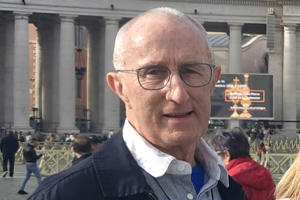
My life as a Brother has unfolded in several major phases: initially, as a secondary teacher. This lasted for 12 years. Then I was sked to come to Rome to study psychology as applied to the development and integration of people within the Christian vocation. I spent four years living in another culture and learning another language. It was the first time I had lived with anybody except other Christian Brothers. For the first three years I went twice a week to one-on-one sessions of therapy for my own growth, so the course was not just academic, but very personal and existential. It was during this time that I think I really “owned” my calling as a Brother in a deep and definite way.
When I returned to Australia I spent 15 years – firstly, as a psychologist and counsellor (working with young religious and lay people), then in leadership in our own congregation. At the end of this time, I was invited to move to Africa to assist in the formation and development of young Africans who wanted to become Christian Brothers. I spent 17 years in Africa, mainly based in Nairobi, Kenya. I had various combinations of roles as a formator, teacher and in leadership.
In the last nearly five years, I have been in Rome, in an administrative role at our HQ.
More and more in the last 30+ years, the basis of my life has been trying to take seriously that we are called to be “brothers” to any and all, especially those most in need. This helps me to see that there has, in fact, been a continuity in my life, a connecting thread in the different roles I have had – teacher, deputy headmaster, psychologist, Congregation leadership, accompanying young religious, community member with my fellow Brothers. They are all about the desire, the journey, to be truly a brother, to be available to others, to be of service.
I have been told over the years that others find me approachable and calm, that I am open and friendly, that they can tell me anything personal and I don’t get shocked or judgemental. I was once told by a former student that he appreciated that in my classes, especially in RE, students could ask about anything and expect to get an answer (rather than rebuke, avoidance, anger).
Some of this is the result of my upbringing and life story (especially learning to cope with the early loss of my mother and other family struggles), some is the temperament I was born with, some of it is the training I had in Rome doing psychology, a lot is also the fruit of my times living out of my own culture. Wherever it comes from, it tells me that I have, to some degree, learned to be a “brother” in the way I relate, and this gives me joy and peace.
In particular, I have been greatly touched by my years in Africa and the experiences I had with people living in situations of poverty that most of us in the so-called first world can hardly begin to understand. I am still in touch with some of the friends I made in Kenya, and they inspire me with their determination, faith, courage and ability to keep living each day in hope, despite deprivation and obstacles that most of us can barely imagine. Even when I could no little or nothing for them in a material sense, they accepted me as their brother, as someone who cared about them and wanted at least to offer encouragement and friendship.
We Christian Brothers are disappearing in the developed countries where we once flourished. Through our work of education for all and especially for the poor, we have helped those countries to develop and grow. We are no longer needed, but, while we disappear, the vision and spirit of Edmund Rice continue to inspire educators.
In my view, a Christian and humane education is still often not available in places like Kenya and India. If there is a future for our Congregation it will be in places like that, where the dignity and well-being of all children and young people often come second to a school system geared to exam results and social conformity. An alternative, truly “Christian” sort of education is sorely needed, and so there is a pressing need for those willing to become brothers and sisters to the young, ready to walk alongside and listen.
Br Anthony Shanahan, cfc
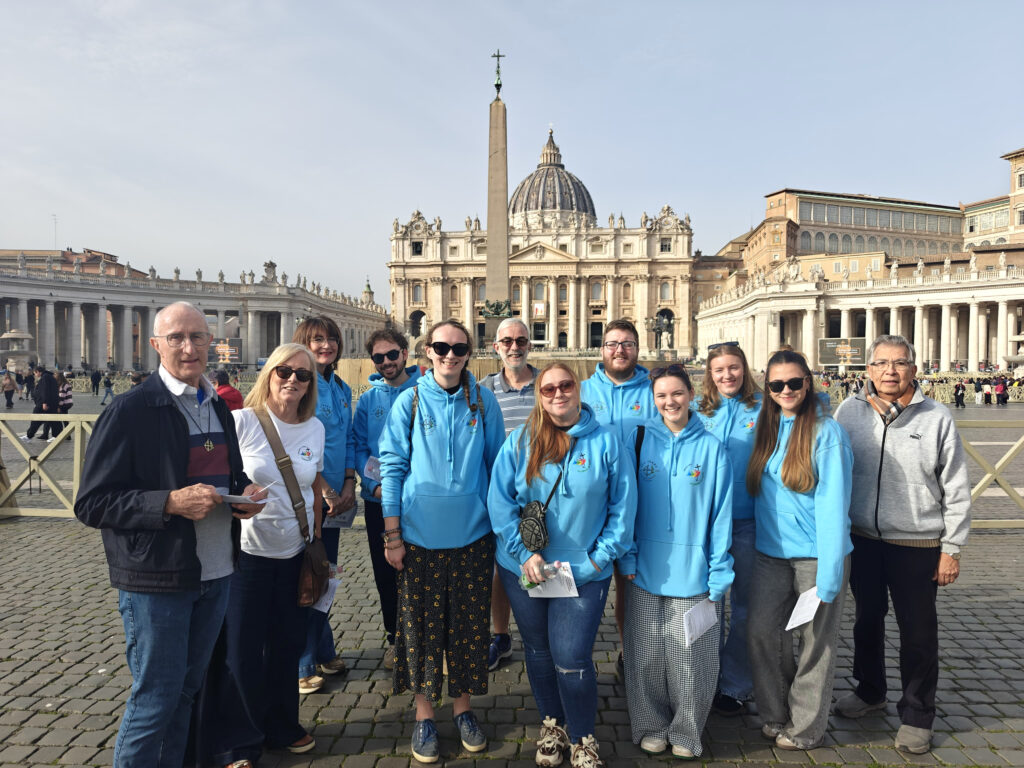
Brother Shanahan (on the left) with our Camps Coordinators on the Jubilee Pilgrimage.
O God, we thank you for the life of Edmund Rice.
He opened his heart to Christ present in those oppressed by poverty and injustice.
May we follow his example of faith and generosity.
Grant us the courage and compassion of Edmund as we seek to live lives of love and service.
We ask this through Christ our Lord.
Amen.